Alt-Search Engines Keep Dying — Here's the Brutal Math Behind Why

Remember Gibiru? Disconnect Search? How about Hulbee? If those names don't ring a bell, you're not alone — and that's kind of the whole problem. Privacy-focused and specialized search engines have been quietly disappearing for years, and most users only notice when they try to visit a bookmark and get a 404 error instead of a search bar.
This isn't a coincidence. There's a very specific set of forces that make it almost structurally impossible for alternative search engines to survive long-term, and understanding those forces matters if you care about having real choices online.
The Infrastructure Problem Nobody Talks About
Building a search engine sounds like a software problem. Write some code, crawl some websites, rank some results. Easy, right? Not even close.
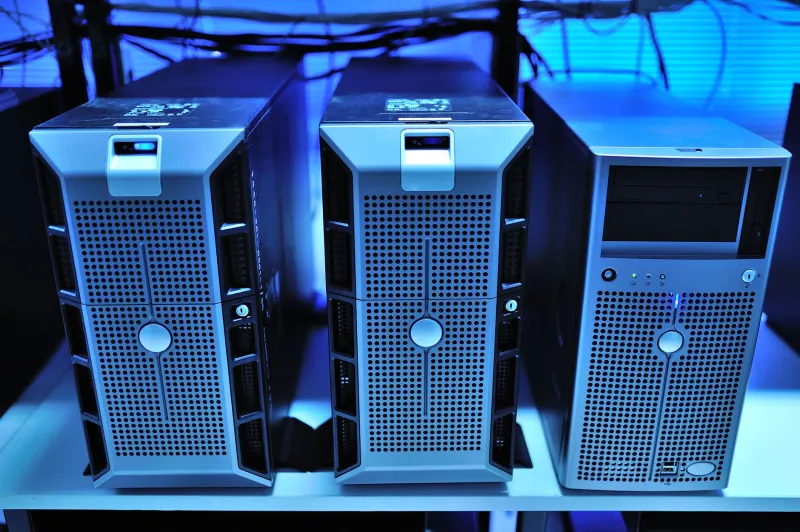
A competitive web index — the database of crawled pages that makes search results possible — costs tens of millions of dollars a year just to maintain. We're talking about thousands of servers running continuously, massive bandwidth bills, and a team of engineers whose only job is to keep the crawler alive and the index fresh. Google reportedly processes over 100,000 searches per second. That kind of scale requires an infrastructure investment that rivals the GDP of a small country.
For a scrappy privacy-focused startup, those numbers are a death sentence before the product even launches. Most alt-search engines solve this problem by licensing index data from Microsoft's Bing API — which is a reasonable workaround until you realize it creates a whole new set of problems. You're now dependent on a competitor's goodwill, paying per-query fees that scale painfully with growth, and delivering results that are, at best, a filtered version of what Bing already offers. You're not really building an alternative; you're building a skin.
The Acquisition Trap
When an alt-search engine does manage to gain traction, it usually faces one of two fates: slow death by financial attrition, or acquisition by the very kind of data-hungry company it was trying to offer an escape from.
Look at what happened to Ixquick, which became StartPage. It was acquired by a company with ties to digital advertising — a revelation that blindsided its privacy-focused user base and sparked a genuine controversy in the privacy community. Or consider what happened when Yahoo gobbled up smaller search properties throughout the 2000s and 2010s, each time absorbing the technology and quietly shutting down the original product.
The acquisition trap is particularly cruel because it often happens at the exact moment a product is proving its worth. Venture capital dries up, the runway gets short, and suddenly a buyout offer from a larger tech company looks like salvation. For the founders, maybe it is. For the users who trusted that platform with their search behavior, it's a different story entirely.
Why Monetization Is So Much Harder for Privacy Tools
Here's a tension that doesn't get discussed enough: the entire economics of search advertising is built on data collection. The more Google knows about you, the more it can charge advertisers to reach you. That's the engine under the hood of what looks like a free product.
Privacy-focused search engines, by design, can't play that game. They can serve contextual ads — ads based on what you just searched, rather than who you are as a person — but contextual advertising pays out at a significantly lower rate than behavioral advertising. We're talking sometimes 60 to 70 percent less revenue per impression. That's not a minor handicap; it's a fundamental structural disadvantage baked into the business model.
Some engines have tried subscription models, which is genuinely promising but comes with its own friction. Convincing American consumers to pay for something they've received for free their entire digital lives is a steep uphill climb. The majority of users, when presented with a choice between paying $5 a month for a private search experience or using Google for free, choose Google every single time.
Market Consolidation Is the Invisible Ceiling
Even if an alt-search engine solves the infrastructure problem, even if it cracks the monetization puzzle, there's one more wall to climb: distribution.
Default search engine placement on browsers and devices is worth billions. Google pays Apple an estimated $15 to $20 billion annually just to remain the default search engine on Safari. That's not a marketing spend — that's a moat. When a new search engine doesn't have the capital to compete for those default placements, it's fighting for attention in a market where most people never change their browser defaults in the first place.
And when regulators do step in — as the Department of Justice has been doing in its ongoing antitrust case against Google — the process moves at legal speed, which is to say very, very slowly. By the time structural remedies might take effect, several more promising alternatives will have already folded.
What This Means for You
None of this is meant to be fatalistic. The fact that so many people have tried to build privacy-respecting alternatives to Google tells you something important: there's real demand for a different kind of search experience. Users are increasingly aware that their queries are being logged, profiled, and monetized, and they want out.
But that demand deserves honesty about what's actually sustainable. The search engines most likely to survive long-term are the ones with clear, transparent business models — not the ones promising everything for free with no explanation of how the lights stay on. When a privacy search tool can't explain how it makes money, that's not a good sign. Sustainable privacy tech has to be economically viable, or it eventually becomes another tombstone in the graveyard.
The next time you find a search engine you like, it's worth asking: how does this thing actually survive? Because the answer to that question will tell you a lot about whether it'll still be around next year.